

Did you know there are over 150 different community indicators on Grant County Trends - each updated throughout the year? But which ones, and when?
This issue of the Grant County Trends Blog lists the most recently updated indicators on the Grant County Trends website.
This page will be updated and email alerts sent on a quarterly basis. Don't miss an update - subscribe today!
Recent Updates
In PEOPLE:
The county’s foreign-born population holds steady.
This Census measure is a good proxy for the number of immigrants in a community. The most recent estimate (for 2024) puts the number in the county at nearly 22,000. Most of these are not U.S. citizens, with a rate, at 12% of the total population, far above the U.S. and state rates. On the other hand, the rate of naturalized immigrants here, at 4%, is much lower than in the U.S. and state.
The number of foreign-born residents in the county peaked in 2018 and has been largely stable since 2021.
In ECONOMIC VITALITY:
Median household income (MHI) in the county fell a bit in 2024.
Census put the estimate for the county at a little over $73,000 in 2024. The year prior, the estimate was nearly $75,600. The drop was statistically significant. Currently (2024), median household income here is 90% of U.S. MHI. For the prior year (2023), it was 97%.
The causes of the recent decline could be several, but one is likely due to higher unemployment in the county (see below). Some eastern Washington metro areas show median household income greater than that of the U.S.: Tri Cities, Spokane, and in some years, the greater Wenatchee area.
Measured on a different interval, MHI for Moses Lake has been slightly higher than that of the county.
The number of people employed in the county is still below the pre-pandemic peak.
2025 was not a good year for Grant County residents who wanted to work. The average number employed in the county was 40,3009. That is the lowest number since 2013 and is much lower than the recent peak of nearly 44,000 in 2022. And it represents a drop of 3,500 in one year.
Not surprisingly, the unemployment rate in the county edged up last year, to 6.5%, from 5.5% in 2022. While the gap between the rate here vs. those in the U.S. and the state narrowed early in the pandemic, it now lies nearly where it was immediately pre-pandemic, more than two percentage points higher.
The number of employed, plus the number of unemployed, constitutes the size of the labor force. The participation rate, as defined here, is the labor force divided by the population 16 years and over. It gives an idea of the willingness of a region’s population to engage in work for pay.
Both measures for the county have slipped considerably recently. The number of residents in the labor force in 2024 was 43,700, a drop of 3,100 from the prior year, which represented a peak. In turn, the participation rate fell, rather dramatically, to 53% from 57% the prior year. This result continues to mark a reversal in relative standing to a Washington average from 10-15 years ago, when the local participation rate was 2-3 percentage points higher than the state.
The number and share of county residents living in poverty hits all-time high.
The number of people estimated to live in poverty is based on family size and annual increases in the Consumer Price Index. For example, for a family of two adults and two children, the 2024 threshold was about $31,800.
In 2024, the number of county residents living at or under the poverty threshold was nearly 21,100, implying a rate of 20%. This was the highest estimated number and second-highest rate on record.
The poverty rate in Grant County is now much higher than the U.S. rate (12%) and the state (10%).
In EDUCATION:
As of 2024, about one third of all adults in Grant County have some exposure to post-secondary education or an associate’s degree. Most these adults fall into the category of some college but not no degree.
The combined shares here have amounted to about a third of the adult population for several years, with 2021 standing out as an exception. The local shares are higher than those statewide and in the U.S, although it has fallen a bit. The high relative standing undoubtedly reflects the activities of Big Bend Community College.
In HEALTH:
For 2024, Census estimated that nearly 16,300 residents were without any form of health insurance. This translated into a rate of nearly 16%, or one out of every six residents. The benchmark rates remained much lower, with the U.S. at 8% and the state at 7% in 2024.
The trough in Grant County was realized in 2016 of 12%, and the rate has climbed steadily since then.
In HOUSING:
Housing stock by type is slowing changing in the county.
For 2025, the Washington Office of Financial Management updated its series on shares of housing stock types. Single family’s share was 57%; mobile homes at 27.5%; and multi-family, at 15%. This distribution from last year, compared to a decade ago, reveals a slightly higher share of single family, a slightly lower share of mobile homes and a very slightly higher share of multi-family units.
Compared to the state, Grant County now shows a much higher percentage of multi-family units and slightly smaller shares in single-family and mobile homes.
In PUBLIC SAFETY:
Property crimes continued to decline in 2024.
The total number of property crimes in the county in 2024 was 2,465, or 23 per 1,000 residents. This represents a dramatic drop from a decade prior (2015), when the total was 3,869, or 41 per 1,000 residents.
For several years now, the local rate has rested a bit below the state rate, reversing a relative standing from nearly the prior two decades.
Property crimes in the city of Moses Lake have followed a similar pattern, although they went up slightly in 2024. The overall rate, however, of crimes in the county’s largest city has been and remains elevated compared to the county rate.
updated 3.18.26
New Intern Features
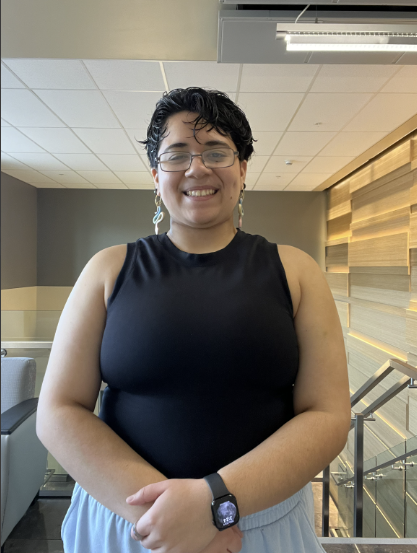
Moon Alvarez
Hometown:
Wapato WA
Major:
Accounting and Human Resources
Expected Graduation Date:
Spring 2028
Post-graduations plans:
Follow the job opportunities, whether here or elsewhere!
After a few months of working on the Trends project, my favorite thing so far:
My favorite thing so far is updating the indicators! I've always been a big numbers person. Updating indicators and seeing the way everything has changed over time is extremely interesting.